
What is Football Freestyle?
30/04/2025
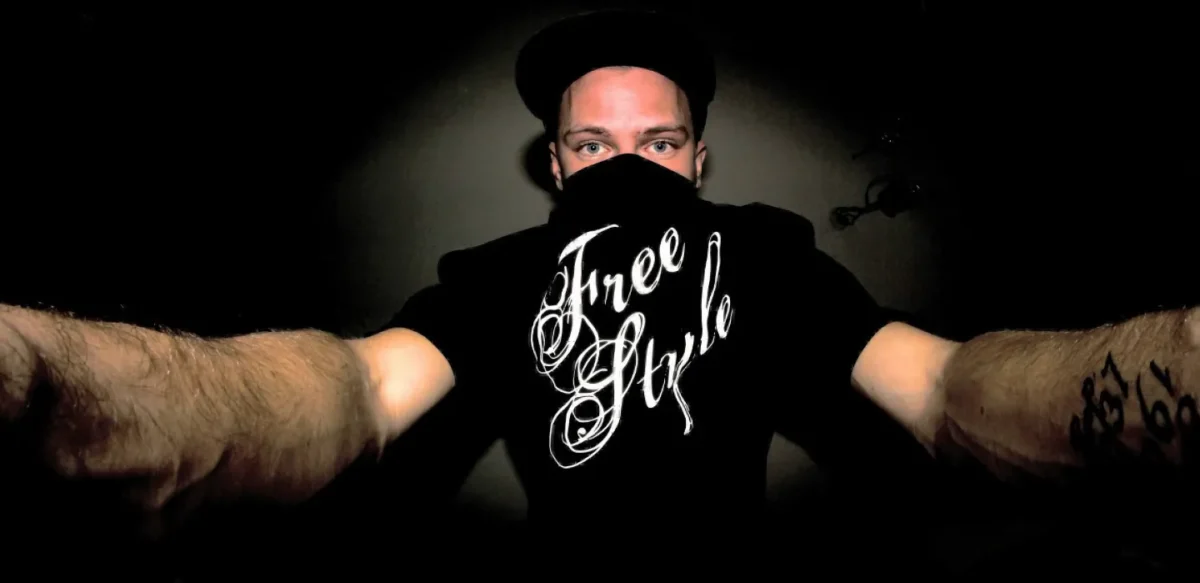
Football Freestyle is a vibrant street subculture that has evolved into a globally recognized sport. At its core, football freestyle involves performing skillful tricks with a football using various parts of the body, blending creativity and athleticism.
History of Football Freestyle
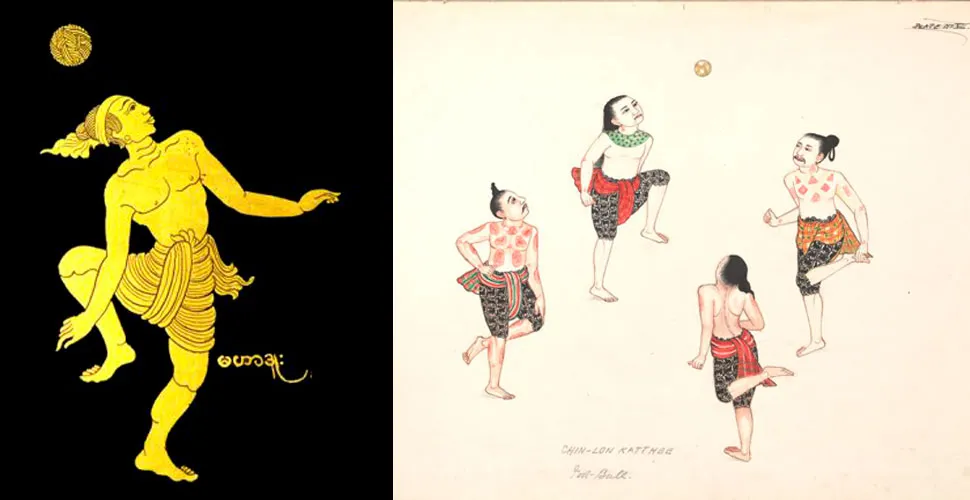
The roots of football freestyle stretch deep into the past. Its origins can be traced to ancient games from South and Southeast Asia, such as Chinlone, Jianzi, and Sepak Takraw, which date back over 1,500 years. For instance, Chinlone, a traditional and distinctive sport from Burma (modern-day Myanmar), was once reserved for royal families. This ball game combines elements of sport and dance, where the beauty of each player’s performance shines through. Many tricks and ball strikes in Chinlone intertwine with movements from Burmese dance and martial arts.
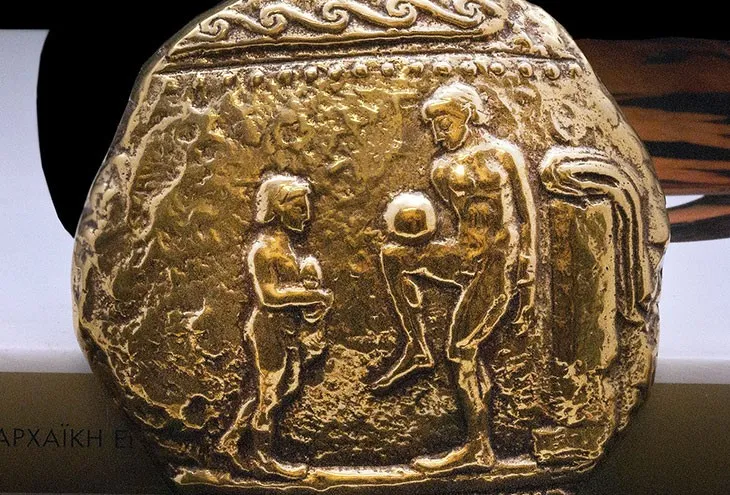
In the West, a similar concept emerged with Episkyros (Greek: ἐπίσκυρος), an ancient Greek ball game considered one of the early precursors to modern football.
One of the exhibits at the National Archaeological Museum in Athens depicts an ancient Greek man balancing a ball on his knee. Looking at this ancient artifact, one can conclude that the man is showing his son what can be done with a ball. According to archaeologists, this image dates back to the 4th century BC.
Some believe football freestyle has its origins in the circus. In the 1920s, Italian circus performer Enrico Rastelli gained fame for his extraordinary juggling skills with various objects, including balls. During this time, he also showcased an array of tricks with a football, blending his performances with elements of the sport.
After World War II, German juggler Francis Brann carried forward Rastelli’s legacy. Brann was the first to perform the iconic Around The World (ATW) trick, now a cornerstone of football freestyle and a favorite among enthusiasts worldwide.
With the rise of television and the growing popularity of professional football, ball tricks became increasingly common among pro players. A true pioneer in this realm was Diego Armando Maradona, whose exceptional talent earned him the reputation as a “magician of the ball” and a significant figure in the history of football freestyle.
The Rise of Professional Football Freestyle
The first professional football freestyler is widely recognized as Hee-Young Woo, known as Mr. Woo, from South Korea. After retiring from his football career, during which he played for teams in Korea and Germany’s Stuttgarter Kickers, Mr. Woo was inspired by Diego Maradona’s extraordinary ball control skills. Determined to become the world’s most renowned football artist, he achieved a remarkable feat in 1989 by earning a Guinness World Record for balancing a football on his head for an astonishing 5 hours, 6 minutes, and 30 seconds.
Starting in 1988, Mr. Woo showcased his exceptional ball-handling skills at numerous high-profile sporting events, including the opening ceremony of the 1988 Summer Olympics in Seoul, the finals of the German Football Cup, English Premier League matches, and the FIFA World Cups in Italy (1990) and the USA (1994). In 2002, he served as an official ambassador for the FIFA World Cup held in his native South Korea and starred alongside Ronaldinho in Nike’s iconic Stickman advertisement.
Modern Football Freestyle
Modern football freestyle is a relatively young sport. In the 1990s, only a small group of enthusiasts worldwide practiced it. Its widespread growth began in the early 2000s, driven by key events that ushered the sport into a new era, giving it a distinct identity for the first time.
One pivotal moment was the release of a video in 2002 (re-uploaded to YouTube in 2008) by Soufiane Touzani, aka 2zani, from Rotterdam. Unlike earlier displays of individual tricks, Touzani performed seamless combinations of moves. This video exploded online, revolutionizing how people viewed football tricks and inspiring a new wave of freestylers.
The second key moment was Nike’s release of a series of iconic advertising campaigns in the 2000s, which became legendary due to the involvement of global football stars like Ronaldinho and their innovative marketing approach. Campaigns such as Stickman Freestyle, Secret Tournament, Joga Bonito, and others not only promoted Nike’s products but also created a cultural phenomenon, popularizing street football and celebrating creativity in the game.
For instance, the Stickman campaign was part of Nike’s broader Freestyle initiative, which celebrated individual skill and street football. These videos focused on ball tricks performed by renowned footballers, with Ronaldinho as a standout star. The minimalist style of the ads showcased jaw-dropping technical abilities. Ronaldinho, known for his charisma and extraordinary technique, was the centerpiece of these clips. One iconic video features him in Nike boots performing freestyle tricks before striking the ball against the crossbar four times in a row without letting it touch the ground. Though debates later emerged about whether this was a genuine feat or edited, the video went viral, amassing millions of views and cementing Ronaldinho’s image as a football magician. The campaign popularized football freestyle, inspiring young people worldwide to pick up a ball and practice tricks. It also reinforced Nike’s association with creativity and freedom in sport.
The Joga Bonito campaign (Portuguese for play beautifully) was launched ahead of the 2006 FIFA World Cup. Its mission was to promote pure and creative football – a game rooted in artistry, joy, and skill, in contrast to rough tactics or diving. Led by legendary French footballer Eric Cantona, who served as the “host” of the video series, the campaign featured stars like Ronaldinho, Ronaldo, Cristiano Ronaldo, Thierry Henry, Wayne Rooney, Zlatan Ibrahimović, and many others. Each clip showcased the players’ unique skills through short, vibrant stories. Ronaldinho, in particular, was often portrayed as the embodiment of Joga Bonito, with his signature flair and infectious smile stealing the spotlight.
Additionally, it’s impossible to overlook the iconic Secret Tournament, also known as The Cage. This was a global Nike advertising campaign with a $100 million marketing budget, coinciding with the 2002 FIFA World Cup. The campaign featured 24 of the world’s top footballers competing in fictional underground 3v3 football tournaments inside a cage, with former player Eric Cantona serving as the tournament referee.
The year 2006 marked a turning point for football freestyle, particularly with the emergence of its most challenging discipline, AirMoves. A video by Swedish freestyler Rickard Sjölander, known as Palle, showcased unprecedented combinations that had never been seen or attempted before. Palle became a living icon, forever etching his name into the history of football freestyle.
Additionally, Palle became the first freestyler in the world to perform a triple-rotation trick, now named after him: the Palle Around The World (PATW).
In any sport, some pioneers lay the foundation for its growth and popularity, and football freestyle is no exception. Alongside Palle and 2zani, whose videos inspired thousands of new freestylers worldwide, the first wave of influential names includes: Hoai “NamTheMan” Nguyen (Ireland), Daniel Roseboom (Netherlands), John Farnworth (United Kingdom), Steve Elias (Canada), Billy Wingrove and Jeremy Lynch (United Kingdom), Tatsulow (Japan), Abbas Farid (Wales), Nelson de Kok (Netherlands), Abdullah Belabbas (Netherlands), Sean Garnier (France), Nejad Brajic (Bosnia), Pawel Skora (Poland), Suru “Fx” Tamasz (Hungary), Szymon “Szymo” Skalski (Poland), Anders “Azun” Solum (Norway), and many others.
With each passing year, football freestyle gained momentum and spread globally, as freestylers worldwide embraced its lack of rules and boundless creativity. Diverse styles emerged, including lowers, uppers, sitting, ground moves, and block tricks. The influx of newcomers to the sport sparked a desire to leave a unique mark on the culture, driving a rapid increase in complexity and skill level. This, in turn, laid the foundation for the development of competitive freestyle.
Although the first football freestyle competitions took place in April 1999 in Toronto, Canada, as part of the international Soccer Expo 99, the first truly prominent tournament was the Masters of the Game World Freestyle Championship in 2003, held in Amsterdam, Netherlands.
Starting in 2006, football freestyle embarked on a new phase of growth with the introduction of regular national and international tournaments and championships. Among the most notable were Masters of the Game 2006, Eurobac 2007, Red Bull Reaccion 2007, Komball 2008, and others.
The introduction of live one-on-one battle competitions for national, continental, and world titles gave freestylers a renewed purpose for daily training, boosting motivation and inspiring them to develop their own unique styles. This also encouraged the creation of personalized tricks and combos to stand out from the crowd.
Against this backdrop, it was only a matter of time before a world championship emerged to crown the best of the best consistently. The freestyle scene welcomed Austrian company Red Bull, which in 2007 organized the Red Bull Reaccion continental competition for freestylers from South American countries. By early 2008, Red Bull announced the Red Bull Street Style World Championship, featuring qualifying events in 42 countries and a global final in São Paulo, Brazil.
Red Bull Street Style marked a turning point that elevated freestyle football to a new level – making it more structured, professional, and appealing to a global audience. The key factor behind this shift was the creation of a worldwide platform backed by a globally recognized brand. Just as important was the media exposure: Red Bull Street Style received extensive coverage, especially through high-quality video content that reached millions of viewers. This helped boost freestyle’s visibility on social media, inspired a wave of new athletes, and cultivated a large, loyal fan base.
Just a year later, in 2009, freestyle football hit another major milestone with the launch of Super Ball (official name since 2012) – the first open international freestyle championship. This tournament laid the groundwork for the formation of a true freestyle community. Super Ball featured competitions across various disciplines, embracing the diversity of freestyle styles and proving that there’s no single way to judge a freestyler. The event’s core message was clear: “Created by freestylers, for freestylers”. Hosted annually in the Czech Republic, Super Ball has become a global pilgrimage site for freestyle athletes from around the world.
The first official governing body for freestyle football was established in 2011 in the United Kingdom. In 2017, after several attempts to unify the fast-growing yet fragmented global scene, leading freestylers and community figures came together to found the World Freestyle Football Association (WFFA). Their goal was to provide support, structure, and clear direction for the future development of the sport.
Today, freestyle football is more than just entertainment – it’s a global movement, celebrated for its accessibility and mass appeal. This fast-growing, visually captivating sport has won the hearts of fans Around The World in record time. Its core philosophy promotes a healthy, active lifestyle and inspires a new, progressive culture across all generations – especially among the youth.
Freestyle football competitions are held on every populated continent. The top athletes are recognized by fans worldwide, and millions of people watch freestyle videos every month. The best part? Anyone can get started. All you need is a ball.
If you’re reading this, it means you’re already curious about freestyle football – and the future belongs to you. Now it’s your turn to make history!