
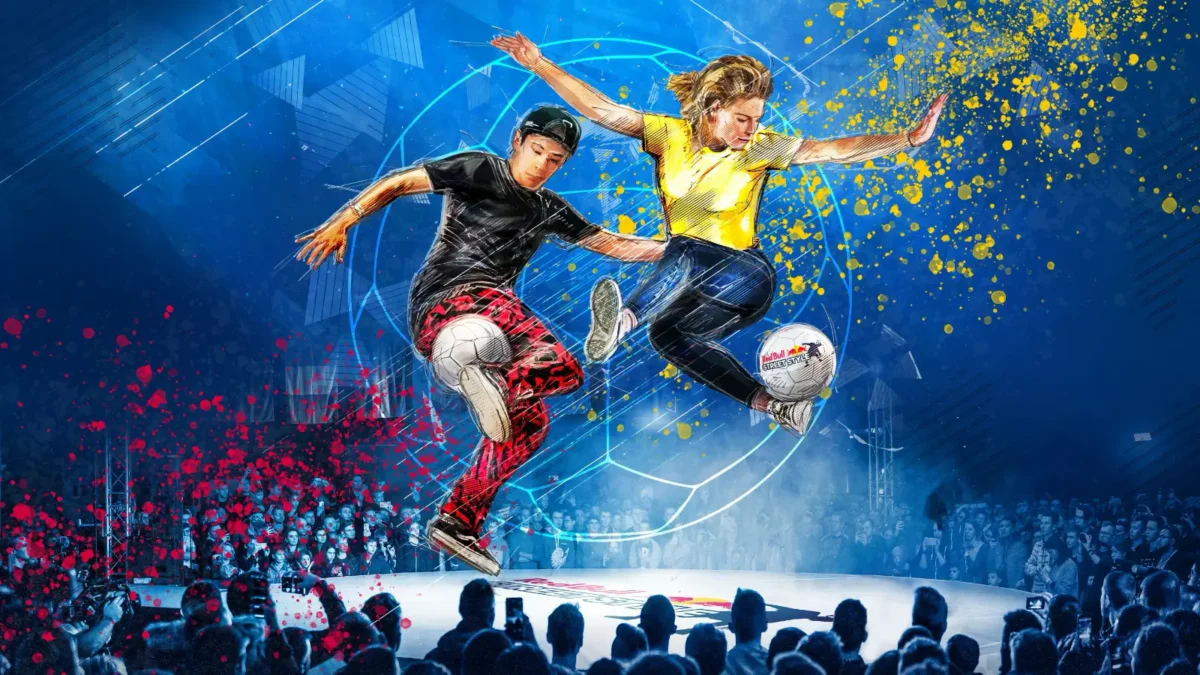
Red Bull Street Style. A Unique Football Freestyle Championship
26/08/2025
3 minutes, 2 players, 1 ball
Red Bull Street Style is one of the first and most prestigious championships, having been held for 17 years. Tricks, incredible creativity, stunning movements in sync with musical accompaniment, and complete control over the football. A fusion of sport and art. Step by step, Red Bull Street Style, like any other competition, had to start somewhere. And it is unique in its authenticity.
How It All Began
A freestyler uses all their skills to elevate simple ball juggling to a new level. Watching a professional effortlessly weave endless combos, you’ll be amazed. Lifts, backflips, spins, handstands, leg jumps, tricks while sitting or lying down.
Let’s take a journey from the very beginning to the present day. The starting point is always hard to pinpoint, but we’ll tell the story as it’s commonly understood, at least for the modern era. Let’s set the timer to the mid-1980s, the era of the legendary Argentine footballer Diego Maradona. With his incredible ball control technique at the time, he captivated the entire world.
In the 1990s, football freestyle began gaining popularity for several reasons, the first being the showcase performances of Mr. Woo and Khan Son Min, both from South Korea. We also can’t overlook the Nike “Stickman” commercial featuring Mr. Woo and Brazilian superstar Ronaldinho in the early 2000s. This brings us to the turn of the new millennium.
In 2003, a video by Dutch freestyler Soufiane Touzani inspired thousands of young people and gave a significant boost to the development of football freestyle worldwide. The sport began to take more consistent steps forward. With the emergence of more and more freestylers, and as with any sport, a bigger stage was needed to witness the best competing against the best.
The Birth of Red Bull Street Style
More or less regular national and continental football freestyle tournaments began taking place in the mid-2000s. These events gave freestylers the motivation to train and develop their unique styles. A defining step in this direction was made possible through the support of the Austrian company Red Bull, which organized the first major regional competition — Red Bull Reaccion.
This 1-on-1 battle-format tournament was held in 2007 and spanned 16 countries across South America, Central America, and the Caribbean. Local competitions were organized in each country, with winners earning the right to compete in the Grand Final, which took place on November 13, 2007, in Buenos Aires, Argentina. The participation of athletes from various countries provided a powerful boost to the development of football freestyle in the region and created a platform for further expansion.
Red Bull Street Style 2008
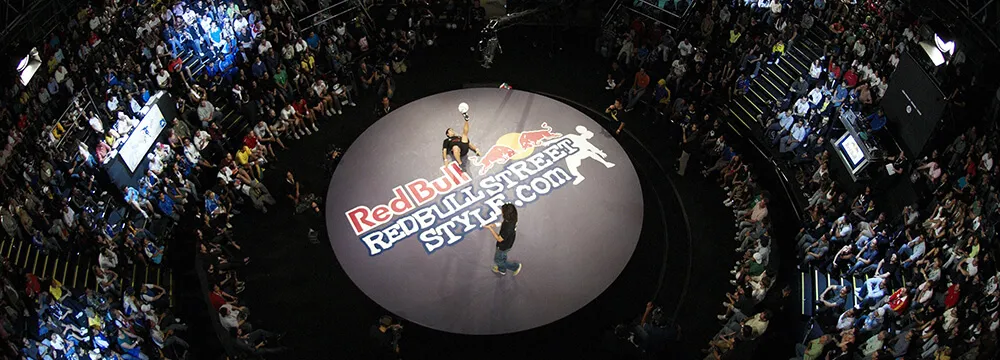
In the spring of 2008, the Red Bull Street Style Austrian Open was held in Vienna, Austria. This promotional tournament featured 16 of the top European freestylers at the time. The format, in which two players competed head-to-head in a 3-minute battle to win and advance to the next round, was a key element that captured the attention of a live audience.
Over the course of six months, qualifying competitions were held worldwide, and their winners from 42 countries came together at the World Final in São Paulo, Brazil. With the inaugural Red Bull Street Style World Final in 2008, the world, fans, and athletes finally had their championship Colosseum. The winner and first official World Champion was French freestyler 🇫🇷 Sean Garnier, who later became the face of Red Bull and a global ambassador for the Red Bull Street Style competitions. Second place went to Japanese freestyler 🇯🇵 Yosuke Yokota, while the host, 🇧🇷 Murilo Pitol, took third.
It’s impossible to overlook the organizers of Red Bull Street Style, who stand out with their unique media and marketing approach, making the championship unforgettable. One of the key trends has been inviting global football stars as guests and judges for the competitions. Over the years, these have included legends such as Edgar Davids (Netherlands), Bebeto (Brazil), Falcão (Brazil), George Weah (Liberia), Fabio Cannavaro (Italy), Filippo Inzaghi (Italy), Marco Materazzi (Italy), Raí (Brazil), Nani (Portugal), Cesc Fàbregas (Spain), and others.
Red Bull Street Style 2010
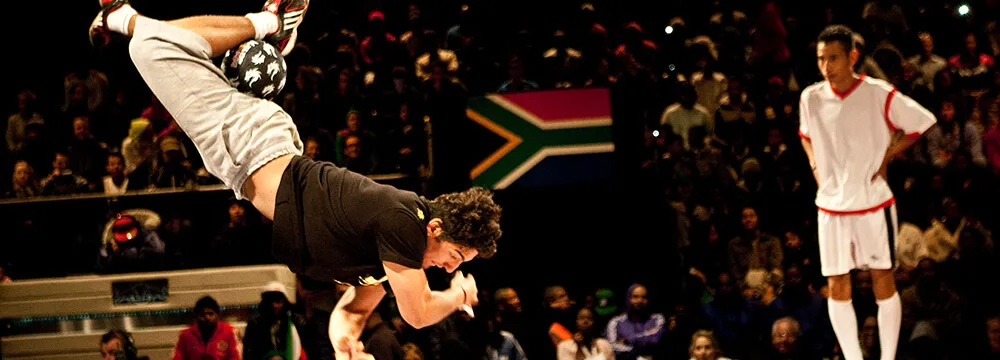
In 2010, the second World Final took place in Cape Town, South Africa. The number of finalists reached a record 55, including a representative from Ukraine, 🇺🇦 Oleksii “Zhura” Zhurakhovskyi. The 2010 champion was Norwegian freestyler 🇳🇴 Anders “Azun” Solum. Local favorite 🇿🇦 Kamalio took second place, while Colombian 🇨🇴 Rocky Mayorga finished third.
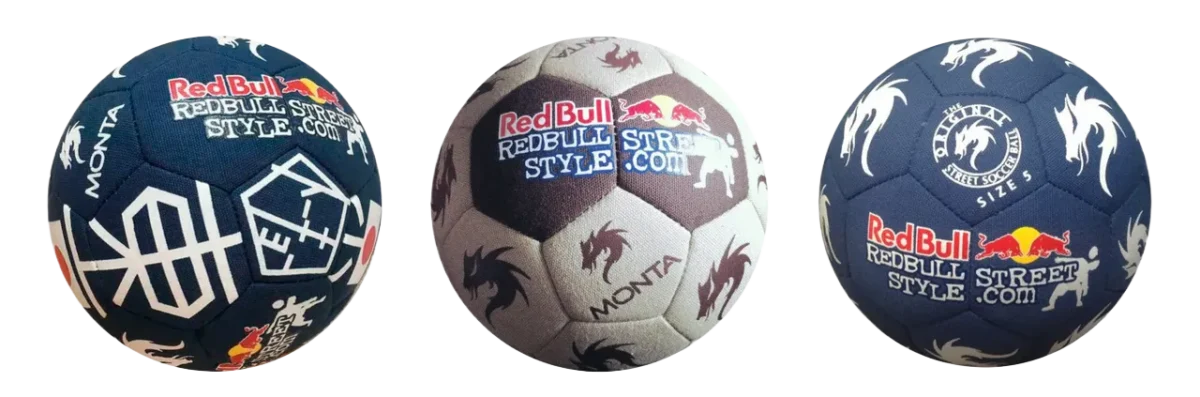
It’s worth noting that since 2009, the Dutch company Monta has been the technical partner of Red Bull Street Style. This brand, known for its iconic denim balls and football freestyle clothing, gained worldwide popularity thanks to its owner, renowned footballer Edgar Davids, the high quality of its products (which were manufactured in Japan at the time), and its unique and creative design. For quite some time, these balls were produced in limited batches and could only be obtained at Red Bull Street Style competitions.
Red Bull Street Style 2012
Two more years passed before the third Red Bull Street Style World Final took place in Italy, and this final became notable for several events.
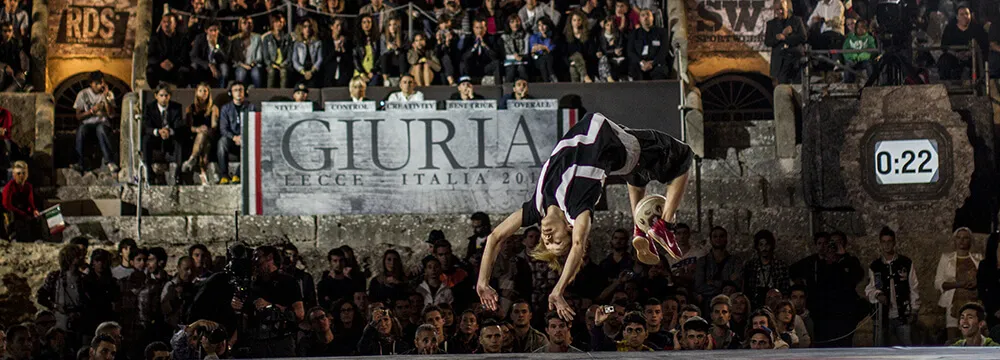
The 2012 World Final was distinguished by its historic and stunning venue — the Anfiteatro Romano in Lecce — as well as an exciting and unforgettable backflip that helped Japanese freestyler 🇯🇵 Kotaro “Tokura” Tokuda defeat Irish freestyler 🇮🇪 Daniel “DanTheMan” Dennehy. The host, Italian freestyler 🇮🇹 Ghunter Celli, took third place.
Another landmark event of the Italian final was the introduction of a women’s tournament, with 🇭🇺 Kitti Szász from Hungary emerging as the winner.
Red Bull Street Style 2013
Red Bull Street Style is truly a competition that unites the world. Not only does it showcase the diversity of incredibly talented freestylers from various backgrounds, but it also highlights the remarkable locations and cultures they get to experience while participating in the World Final. In 2013, that location was the ancient Zojo-ji Temple in Japan’s capital, Tokyo.
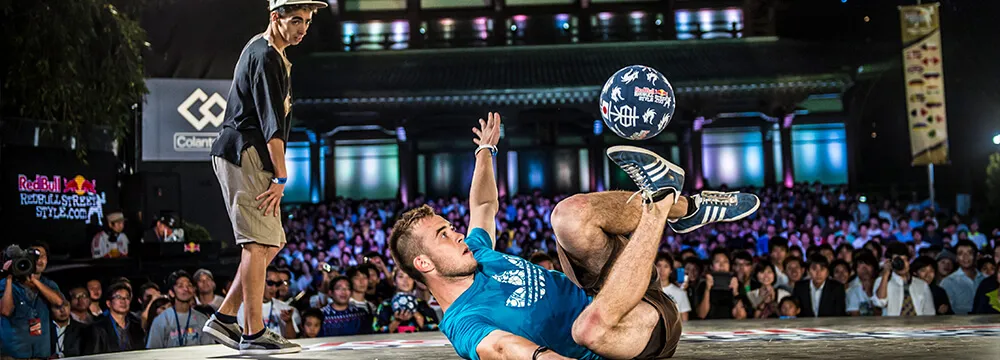
By a twist of fate, this was the first time none of the top three finishers represented the host country. This time, the versatile Polish freestyler 🇵🇱 Szymon “Szymo” Skalski claimed victory, while 🇦🇷 Charly Iacono from Argentina and 🇬🇧 Andrew Henderson from Great Britain finished second and third, respectively.
A historic moment came with the women’s battles, where Hungarian freestyler 🇭🇺 Kitti Szász secured her second consecutive victory, successfully defending her title.
A member of the UkrFreestyle team, 🇺🇦 Oleksii “Zhura” Zhurakhovskyi, represented Ukraine at the World Final for the second time. This time, he made it into the Top 16 best freestylers in the world, confidently advancing through the group stage and reaching the round of 16.
Red Bull Street Style 2014
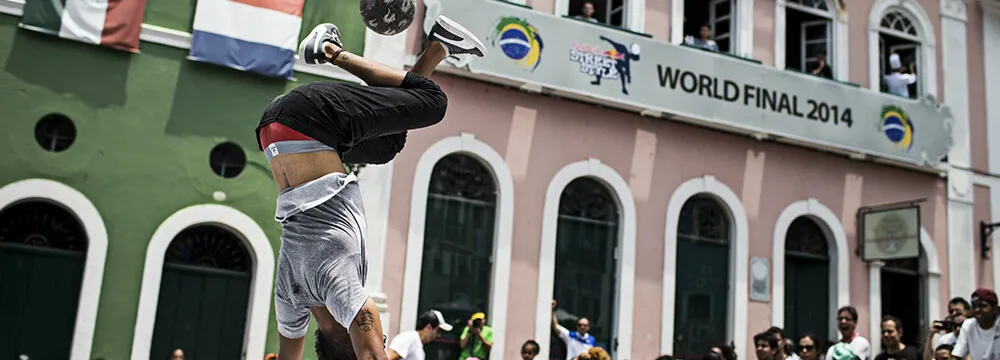
In 2014, the Red Bull Street Style World Final returned to Brazil, held in Salvador. A key highlight of that year was the opportunity for participants to use their own footballs. The men’s championship was claimed by British freestyler 🇬🇧 Andrew Henderson, while Argentine 🇦🇷 Charly Iacono took second place for the second consecutive year, and third place went to 15-year-old Norwegian talent 🇳🇴 Erlend Fagerli.
In the women’s final, French athlete 🇫🇷 Melody Donchet emerged victorious, defeating two-time champion 🇭🇺 Kitti Szász.
Red Bull Street Style 2016
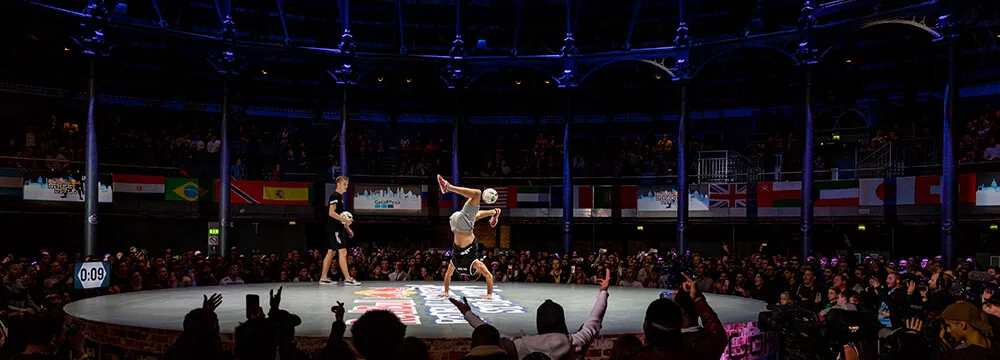
In 2016, after another two-year hiatus, the Red Bull Street Style World Final took place in London, England. The event was held at The Roundhouse, an iconic London venue in the Camden area, renowned as a historic landmark and a prominent arts center. Forty-two finalists competed for the title of the world’s best football freestyler. The winner was Argentine 🇦🇷 Charly Iacono, who reached the final battle for the third consecutive time and finally claimed the championship crown. Second place went to 🇯🇵 Ko-suke from Japan, while third place was taken by Russian 🇷🇺 Anatoliy “MC Pro” Yanchev.
Among the women, 🇫🇷 Melody Donchet from France secured her second consecutive victory.
Red Bull Street Style 2018
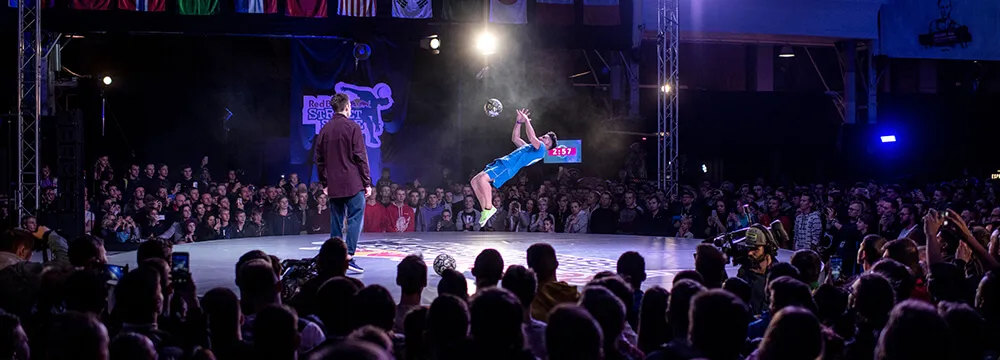
The Red Bull Street Style World Final 2018 was held in Warsaw, Poland. This tournament marked the first collaboration between Red Bull and the World Freestyle Football Association (WFFA). Over the previous two years, the skill level and creativity of the participants had increased dramatically, and the cost of even the smallest mistake became significantly higher. A notable highlight of the year was the performance of the Norwegian brothers 🇳🇴 Erlend Fagerli and 🇳🇴 Brynjar Fagerli, who took first and third places, respectively. The runner-up was Brazilian 🇧🇷 Ricardinho.
In the women’s final, the host country’s representative, Polish freestyler 🇵🇱 Aguska Mnich, claimed victory, defeating two-time champion 🇫🇷 Melody Donchet from France in the decisive battle.
Red Bull Street Style 2019
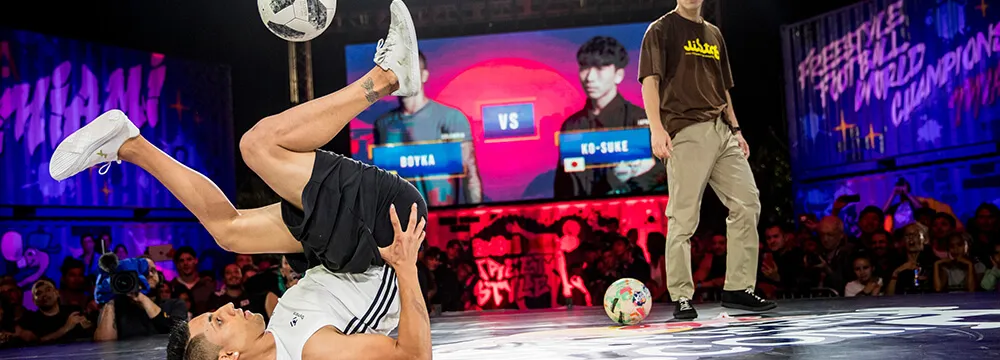
In 2019, the Red Bull Street Style World Final took place in the Wynwood Walls district of Miami, USA, an open-air museum showcasing massive graffiti artworks created by some of the world’s most renowned street artists. Among the men, Brazilian freestyler 🇧🇷 Ricardinho claimed victory, defeating the previous year’s champion 🇳🇴 Erlend Fagerli in the semifinal and overcoming his friend, Colombian 🇨🇴 Boyka Ortiz, in the decisive battle.
French freestyler 🇫🇷 Melody Donchet set an absolute tournament record, becoming the first athlete (male or female) to win the Red Bull Street Style title three times. In the final battle, just like in 2018, her opponent was 🇵🇱 Aguska Mnich, but this time the French representative emerged victorious. It’s worth noting that Melody achieved this win after recovering from a severe knee injury and surgery, with her participation in the World Final being uncertain until the last moment.
All the battles from the final day of the competition can be viewed via the link.
Red Bull Street Style 2020
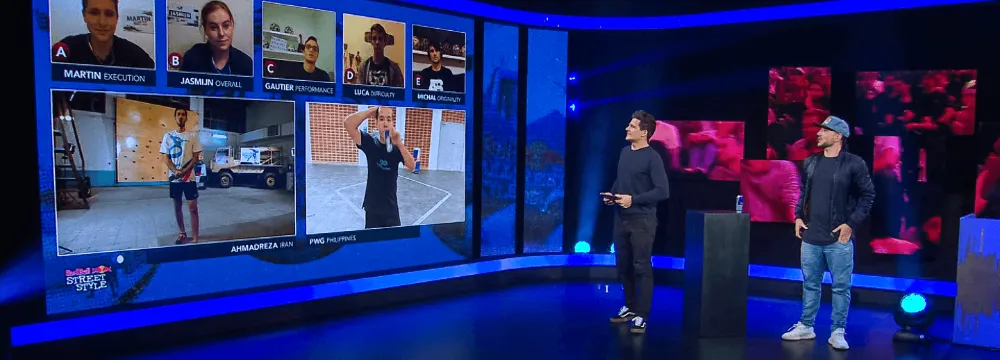
In 2020, due to the global coronavirus pandemic, nearly all national qualifiers were canceled, and the World Final was at risk of not taking place at all. The competition organizers made an unexpected decision. Since the first Red Bull Street Style tournament in 2008, all World Finals had been held on different continents, on stages, and in front of large crowds. This time, however, participants, judges, and spectators were online, regardless of their location.
After several months of qualifying rounds involving athletes from around the world, 24 freestylers from 11 countries took part in the Grand Final, competing live from thousands of miles apart. The winner was Norwegian 🇳🇴 Erlend Fagerli, who faced his own brother, 🇳🇴 Brynjar Fagerli, in the final.
Among the women, the French legend 🇫🇷 Melody Donchet stood out, becoming the first athlete to secure four victories at the Red Bull Street Style World Finals.
The special guest was World Cup champion and two-time European football champion Cesc Fàbregas, who watched the final from his home in Monaco and served as a judge for the “Best Trick” competition. The awards in this category went to Norwegian 🇳🇴 Brynjar Fagerli and Hungarian 🇭🇺 Kitti Szász.
Red Bull Street Style 2021
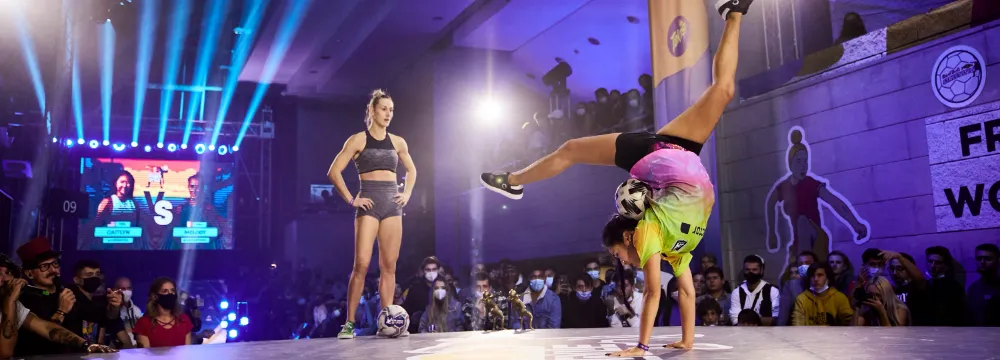
The 2021 Red Bull Street Style World Final took place in Valencia, Spain, returning to its traditional in-person format with a live audience, marking a shift away from the online setting. However, nearly all national qualifiers were held online, as they were in 2020.
After a year of qualifying competitions, an initial pool of over 700 contenders was narrowed down to the top 24. Due to pandemic restrictions, the final included 16 men and 8 women.
Norwegian 🇳🇴 Erlend Fagerli celebrated victory once again, claiming his third Red Bull Street Style championship title, making him the sole record holder among men. In the final, he faced Dutch freestyler 🇳🇱 Jesse Marlet. The bronze medal went to Colombia’s champion 🇨🇴 Boyka Ortiz.
The women’s competition was the most intense in the history of Red Bull Street Style. A new star, 🇬🇧 Lia Lewis from Great Britain, rose to prominence and claimed the title, defeating the 2018 champion 🇵🇱 Aguska Mnich in the final. Lewis’s victory was all the more remarkable considering she only began practicing football freestyle in 2018.
The biggest surprise for everyone was that four-time champion 🇫🇷 Melody Donchet didn’t secure a podium finish. The audience gave the legendary athlete a long-standing ovation. Visibly emotional, Melody broke down in tears and hinted that this World Final would be the last in her career.
Red Bull Street Style 2022
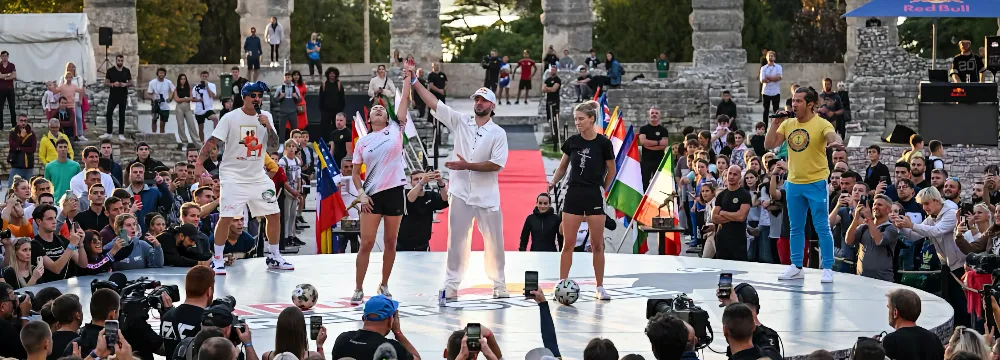
This year, the Red Bull Street Style World Final took place in Croatia. The venue was the stunning ancient Roman architectural monument, the Amphitheatre, in the city of Pula.
The men’s competition brought several surprises. Notably, one of the favorites, 🇳🇱 Jesse Marlet from the Netherlands, suffered an unexpected defeat in the first round, as did the Asia-Pacific champion, 🇮🇷 Mohammed Akbari from Iran. However, the final battle was a classic of recent years.
Norwegian brothers 🇳🇴 Erlend Fagerli and 🇳🇴 Brynjar Fagerli faced off against each other for the last time in a football freestyle competition. Brynjar had announced before the tournament that he would retire after the World Final. In an incredibly intense showdown, the younger brother, Erlend, emerged victorious. This win marked his fourth Red Bull Street Style World Final title, setting a record among male competitors. Third place, for the third consecutive time, went to Colombia’s top freestyler, 🇨🇴 Boyka Ortiz.
In the women’s battles, a true fairy tale unfolded for the USA representative 🇺🇸 Caitlyn Schrepfer. She claimed the championship title in a hard-fought battle against 🇵🇱 Aguska Mnich, whom she had never defeated at major tournaments before. The Polish freestyler, after her 2018 victory, lost her third consecutive final, setting an unfortunate record for the competition. Third place went to the previous year’s champion, 🇬🇧 Lia Lewis from Great Britain.
For the first time in Red Bull Street Style history, a new award was presented. The “People’s Choice Award” was given to the 2018 champion 🇵🇱 Aguska Mnich and the rising French star 🇫🇷 Tristan Gak. This award reflects recognition from the wider audience, regardless of the final results, and serves as additional motivation for personal growth and the development of a unique style.
Red Bull Street Style 2023
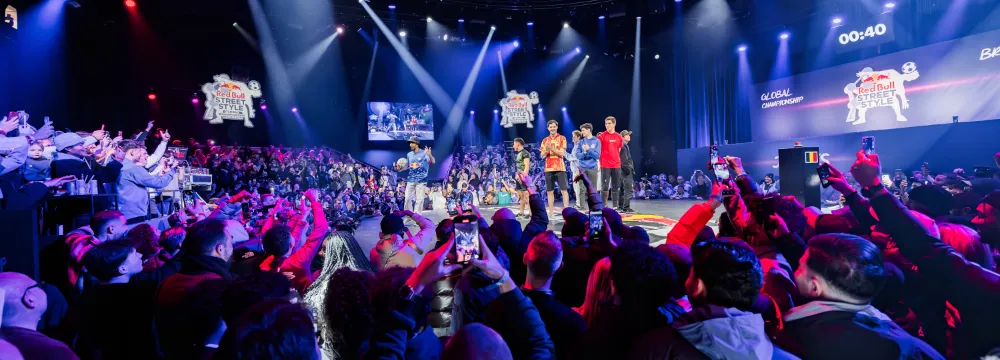
The 2023 Red Bull Street Style World Final took place in Brussels, Belgium, marking the 12th edition of the event. This year, only pre-selected freestylers were able to participate, with a total of 24 athletes (12 men and 12 women).
The biggest surprise was the victory of 🇦🇺 Jay Hennicke from Australia. In the final battle, he defeated the main favorite of recent years, 🇳🇱 Jesse Marlet from the Netherlands. Third place went to 🇫🇷 Tristan Gak from France, who, in his last battle, overcame 🇳🇴 Erlend Fagerli. Following the event, Erlend announced his retirement from his professional career, during which he had won 10 World Champion titles (4 of them at Red Bull Street Style championships).
New names shone brightly among the women as well. The winner was 21-year-old Italian 🇮🇹 Anastasia Bagaglini, who defeated Canadian 🇨🇦 Mathilde Fortier in the final. Third place was claimed by the previous year’s U.S. champion, 🇺🇸 Caitlyn Schrepfer.
Red Bull Street Style has become an iconic and historic event due to its pioneering role in elevating football freestyle from a niche activity to a globally recognized sport, blending athletic skill with artistic expression. Over its history, the championship has provided a platform for athletes from diverse backgrounds to showcase their creativity and technical mastery, inspiring countless freestylers worldwide. By hosting world-class competitions in breathtaking venues, collaborating with football legends, and introducing innovations like women’s tournaments and online formats, Red Bull Street Style has significantly shaped the sport’s growth, fostering a vibrant global community and pushing the boundaries of what’s possible with the ball.
The story continues…